Quality Custom Book Printing for Authors,Publishers and Creators - SeSe Printing


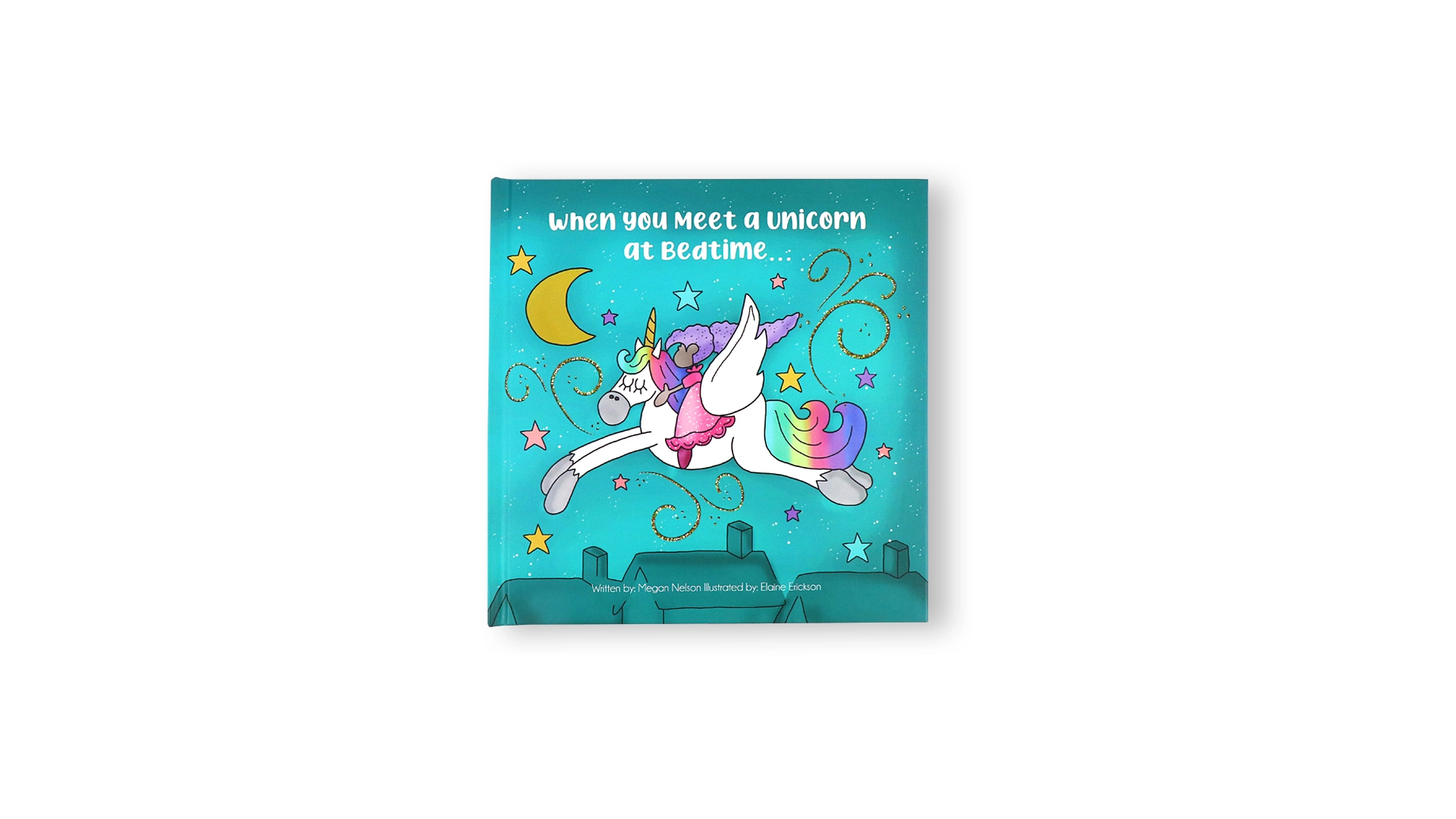
Custom Illustration Story Books Printing Kids Books Hardcover
Printing a kids' picture book involves producing physical copies of a book designed for children, typically featuring colorful illustrations and a simple narrative.
Custom Illustration Story Books Printing Kids Books Hardcover
Custom children's books can be created by a professional author and illustrator, or they can be self-published. Many people prefer to create their own custom books, as it allows them to express their own creative vision and tell a story in a way that is unique to them.
| Product Name | Printed Kids Books | |||
| Material | Glossy/matt art paper, offset paper, woodfree paper, writing paper, light coated paper, special type paper, C1S C2S board,C1S grey board, kraft paper, light weight coated paper, wood free paper, and so on. | |||
| Binding | Thread sewning binding, flexi-bound binding, saddle-stitching binding, glue binding, wire-o binding, spiral binding,casebound binding, etc. | |||
| Certification | ISO9001, FSC | |||
| Design | From Clients,OEM | |||
| Size | Decided by Client | |||
| Printing | CMYK or Pantone | |||
| Artwork Format | AI, PDF, ID, PS, CDR | |||
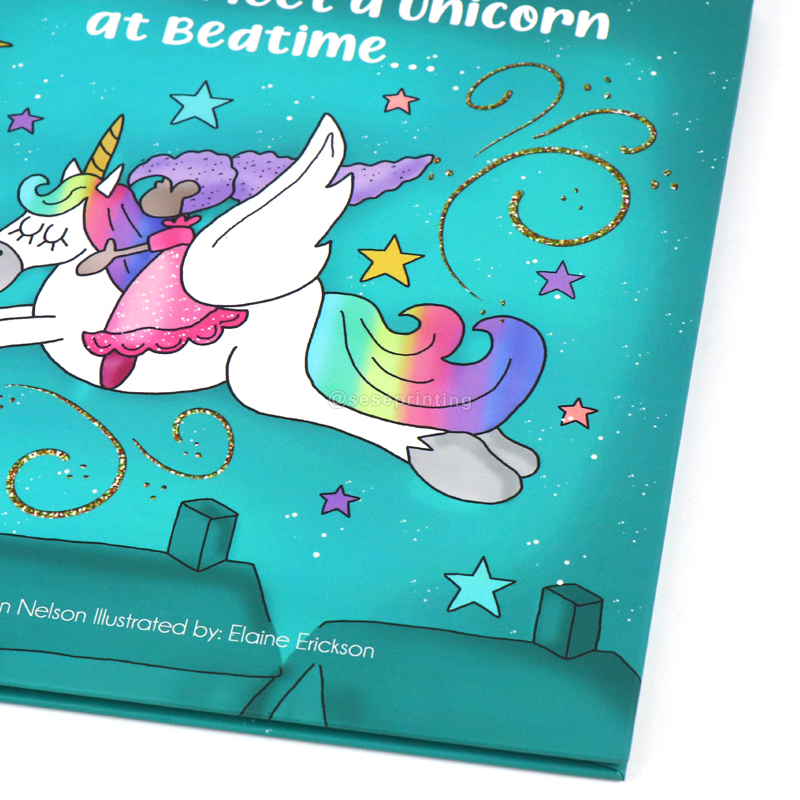
| Finishing | Gloss or Matt Lamination, Spot UV, Emboss, Deboss and Sprayed Edges | |||

Book Size and Format:
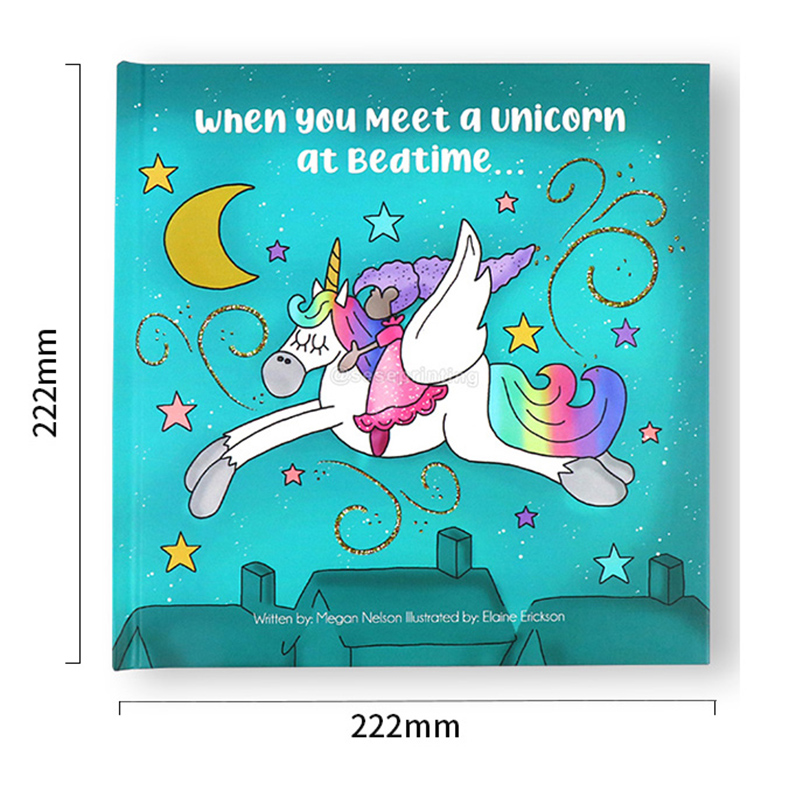
Decide on the size of your picture book. Common sizes for children's books include 8x8 inches, 10x8 inches, and 11x8.5 inches.
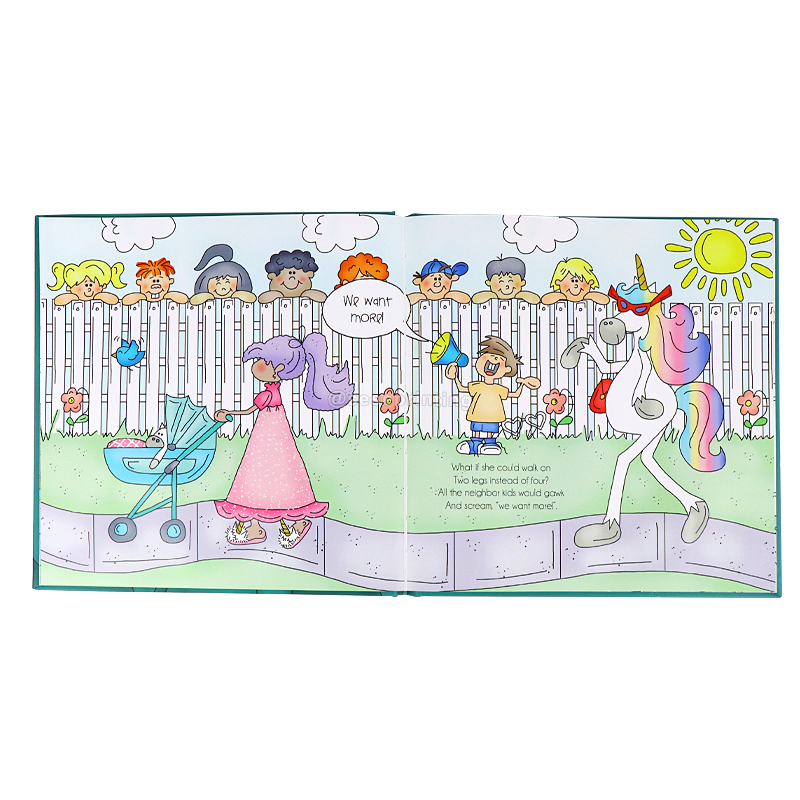
Choose the format, such as hardcover, softcover, board book (sturdy pages suitable for young children), or pop-up book.
Binding Choose:
Paperback binding: Glue the pages to a soft cover, suitable for lightweight books and magazines.
Hardcover Binding: Covered with cardboard and wrapped in cloth or leather for a more durable and upscale binding.
Sewing binding: Seams secure the pages to the spine for added durability and closure.
Coil binding: A round metal coil is threaded through the perforated pages for easy flipping and laying.
Spiral binding: The pages and cover are held together by a metal spiral, allowing the pages to turn freely.
Note that different binding methods are suitable for different types of books and design styles, and you can choose the appropriate binding method according to your publishing needs and preferences.
Cover Material:
Cardboard Cover: Use heavy cardboard, usually wrapped with cloth or leather, to provide a sturdy and upscale look.
Softboard Cover: Uses thinner cardboard for light-weight books that can be added to perfect or hardcover bindings.
Cloth cover: Cloth on cardboard for texture and durability, often used for hardcover books.
Leather Covers: Covered in real or synthetic leather, giving books a luxurious and classy feel.
Embossed Covers: Use a bumpy embossed effect on the cover for added tactile and visual appeal.
Clear Cover: Made of clear plastic or PVC material to showcase the design or picture underneath the book cover.
Paper Cover: Using thick paper, you can print patterns, text or illustrations, suitable for light books and magazines.
Each cover material can add a different style and character to the book, and you can choose the right cover material according to the type of book, audience and design needs.
E-mail: sales01@seseprinting.com
Mobile phone: +86-13570912663
WhatsApp: 008619066781165
Tel: +86-020-34613569
Add: 702 No. 21 Huizhong Road, Shiqiao St, Panyu District. Guangzhou city, Guangdong Province. China