Quality Custom Book Printing for Authors,Publishers and Creators - SeSe Printing


A Guide to Printing Board Books for Children
A Guide to Printing Board Books for Children
Board books are an essential part of early childhood learning. Unlike traditional paper books, they are designed to withstand rough handling, making them ideal for babies and toddlers. Printing high-quality board books requires careful attention to material selection, design, and production techniques. This guide walks you through everything you need to know about creating engaging and durable board books for children.
1. Understanding Children's Board Books
A board book is a type of children's book printed on thick, durable paperboard. Unlike traditional picture books with paper pages, board books are made for babies and toddlers aged 0-3. Their primary purpose is to be indestructible, interactive, and safe. The content is typically simple, focusing on bright images, basic concepts (like colors, numbers, or animals), and minimal text. The physical design is as important as the content, ensuring the book can survive the rigors of early childhood while stimulating sensory development.
The primary goal of a board book is durability and simplicity. Unlike traditional storybooks, board books focus on bold visuals, tactile engagement, and interactive elements such as textures, flaps, or die-cut shapes.
2. The Board Book Production Workflow
Concept and Design: Plan your story or educational content. Keep illustrations simple, bold, and age-appropriate.
Layout Preparation: Design spreads (two facing pages) carefully, considering that thick pages may reduce the visible area near the spine.
Material Selection: Choose durable paperboard and cover finishes that enhance durability and visual appeal.
Printing: High-quality digital or offset printing ensures vibrant colors and sharp images.
Lamination and Coating: Apply finishes such as gloss, matte lamination, or UV coating to protect the pages from wear and tear.
Die Cutting and Shaping: Optional interactive features like rounded corners or die-cut shapes can be added.
Binding: Board books are usually bound with a fold-and-glue method, ensuring the pages remain securely attached.
Quality Control: Inspect each book for color consistency, proper binding, and page alignment.
3. Key Specifications for Board Books
When planning a board book, several specifications must be considered to ensure it is both child-friendly and production-ready.
3.1. Board Book Length: Consider Spreads, Not Pages
Board books are best designed in spreads rather than focusing solely on page count. Each spread should convey a complete thought or image. Typically, board books have 8, 12, or 16 pages (4, 6, or 8 spreads) to maintain simplicity and engagement.
3.2. Board Book Content: Simple Words or Short Sentences
Text should be concise, easy to understand, and age-appropriate. Single words or short sentences paired with vibrant illustrations are ideal. Avoid long paragraphs or complex storylines.
3.3. Board Book Size: Consider Small, Not Big
Smaller books are easier for little hands to hold. Standard dimensions range from 5" x 5" to 7" x 7", but rectangular formats like 6" x 8" can also work. The focus should always be on accessibility for children.
3.4. Board Book Stock: Think Paperboard, Not Paper
Use thick paperboard, typically 1.2mm to 2mm per page, instead of standard paper. This ensures pages are sturdy, durable, and able to withstand repeated use.
3.5. Board Book Covers: Consider Self Covers, Not Separate Covers
Board books usually have self covers—pages are printed on the same material as the inner pages, with no separate soft or hard cover. This enhances durability and simplifies production.
3.6. Board Book Page Count: Few Pages, Not More
Keep page counts low, generally between 8 and 24 pages, to maintain attention and prevent the book from becoming cumbersome. Each page should have a clear purpose in storytelling or education.
3.7. Board Book Edge: Round Corner, Not Square
Rounded corners are safer for young children and reduce wear over time. They also give the book a polished, professional look.
3.8. Board Book Finish: Lamination, Foil Stamping, Spot UV, Die Cut
Protective finishes enhance both aesthetics and durability:
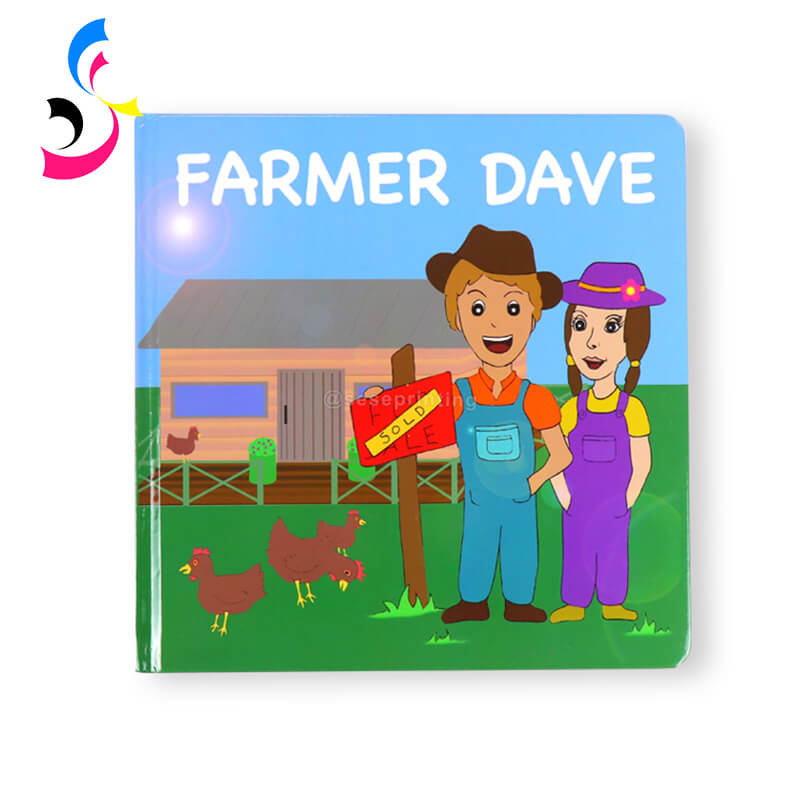
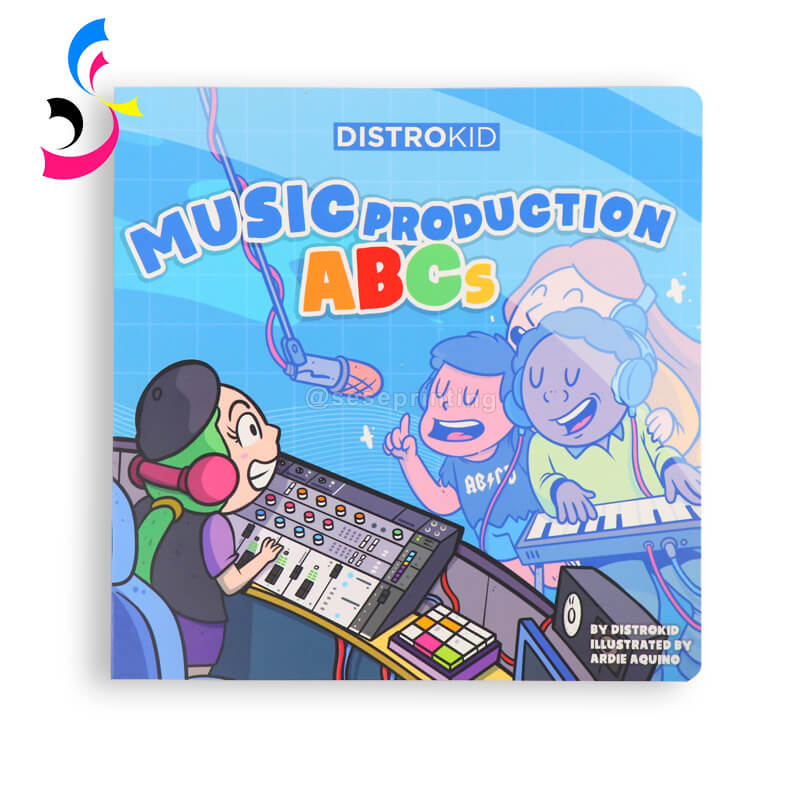
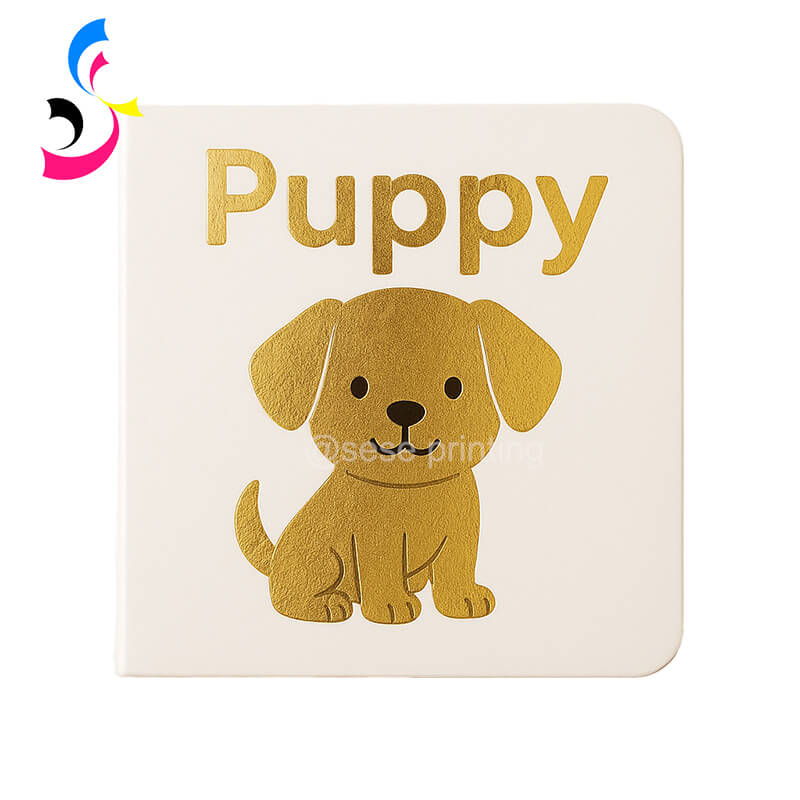
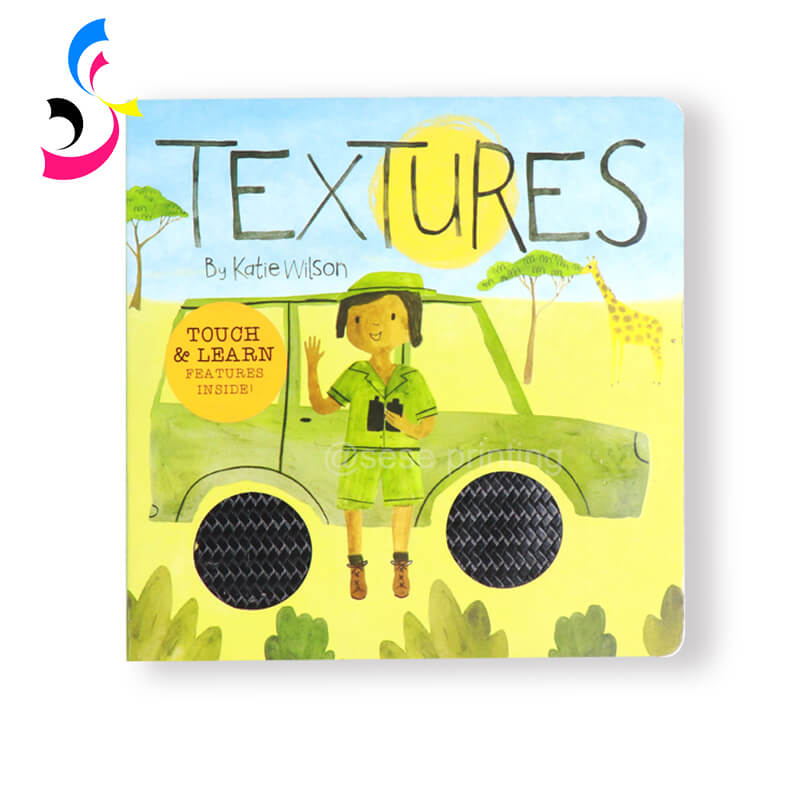
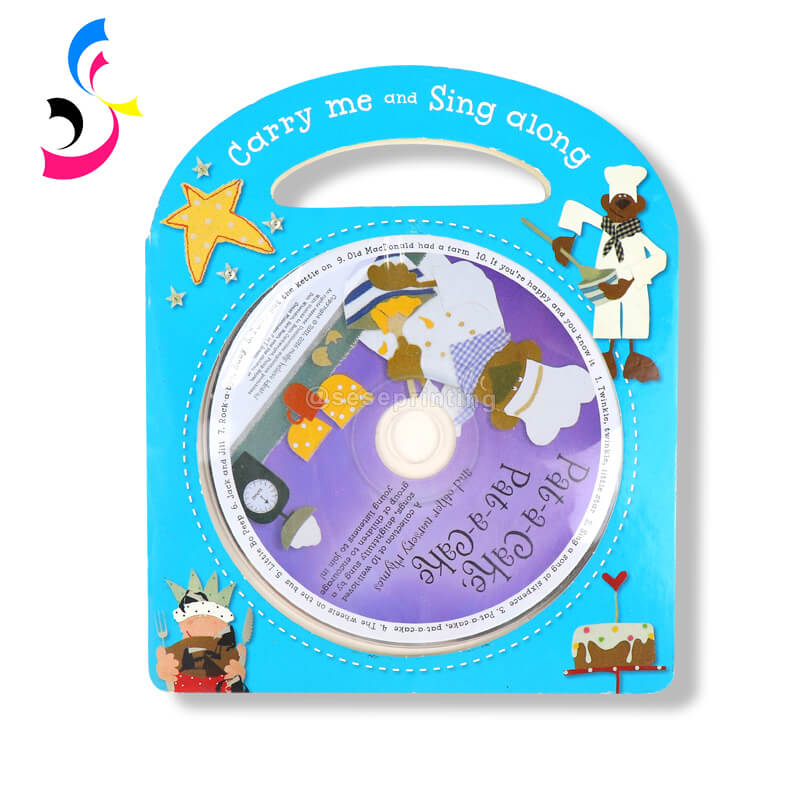
Lamination: A plastic film (gloss or matte) is applied to every page to protect against moisture, dirt, and wear.
Foil Stamping: Adds a shiny, metallic element to titles or illustrations for visual appeal.
Spot UV: A glossy, raised varnish is applied to specific areas to create texture and highlight certain parts of the artwork.
Die-Cut: Shapes are cut out of the pages (e.g., a peek-through hole) to add an interactive, tactile element.
4. Tips for High-Quality Board Book Printing
Use High-Resolution Artwork: Ensure all images are at least 300 DPI for crisp printing.
Test Color Accuracy: Board books are visually driven, so colors must be vibrant and true to design.
Select Durable Inks: Non-toxic, child-safe inks are essential.
Plan Page Alignment Carefully: Thick pages may shift slightly during binding; keep critical content away from edges.
Inspect Prototypes: Review physical mock-ups before mass production to catch issues early.
Account for Bleed and Safety Margins: Extend background images 0.125"" beyond the trim line (bleed) and keep critical text and elements well inside the page margins to avoid being cut off.
Choose the Right Finish: A gloss laminate is easy to wipe clean, while a matte laminate offers a premium feel. Use special finishes strategically to enhance the design without overcomplicating production.
5. How to Find a Professional Quality Board Book Supplier
Choosing the right printer is the most crucial step in ensuring your vision becomes a safe, durable, and beautiful reality. Look for a supplier with proven expertise in children's book printing. A company like Sese Printing stands out as an ideal partner for several reasons.
Sese Printing specializes in high-quality custom board book manufacturing. With years of experience, they understand the unique demands of this niche product. We guide you through the entire process, from material selection (offering various board thicknesses) to recommending the best finishing techniques for your design. We commitment to using non-toxic, child-safe inks and materials, combined with rigorous quality control, ensures every book meets the highest safety standards. When you partner with a specialist like Sese Printing, you benefit from our technical knowledge, ensuring your board book is not only lovely to look at but also built to last through years of love and learning.
6. Conclusion
Printing a board book is a specialized craft that blends creative storytelling with industrial precision. By understanding the unique requirements—from page count and size to paperboard and safety features—you can create a product that will captivate and endure. Meticulous planning, child-centric design, and partnering with an experienced printer like Sese Printing are the keys to success. A well-made board book is more than just a story; it's a child's first introduction to the magical world of reading.

E-mail: sales01@seseprinting.com
Mobile phone: +86-13570912663
WhatsApp: 008619066781165
Tel: +86-020-34613569
Add: 702 No. 21 Huizhong Road, Shiqiao St, Panyu District. Guangzhou city, Guangdong Province. China